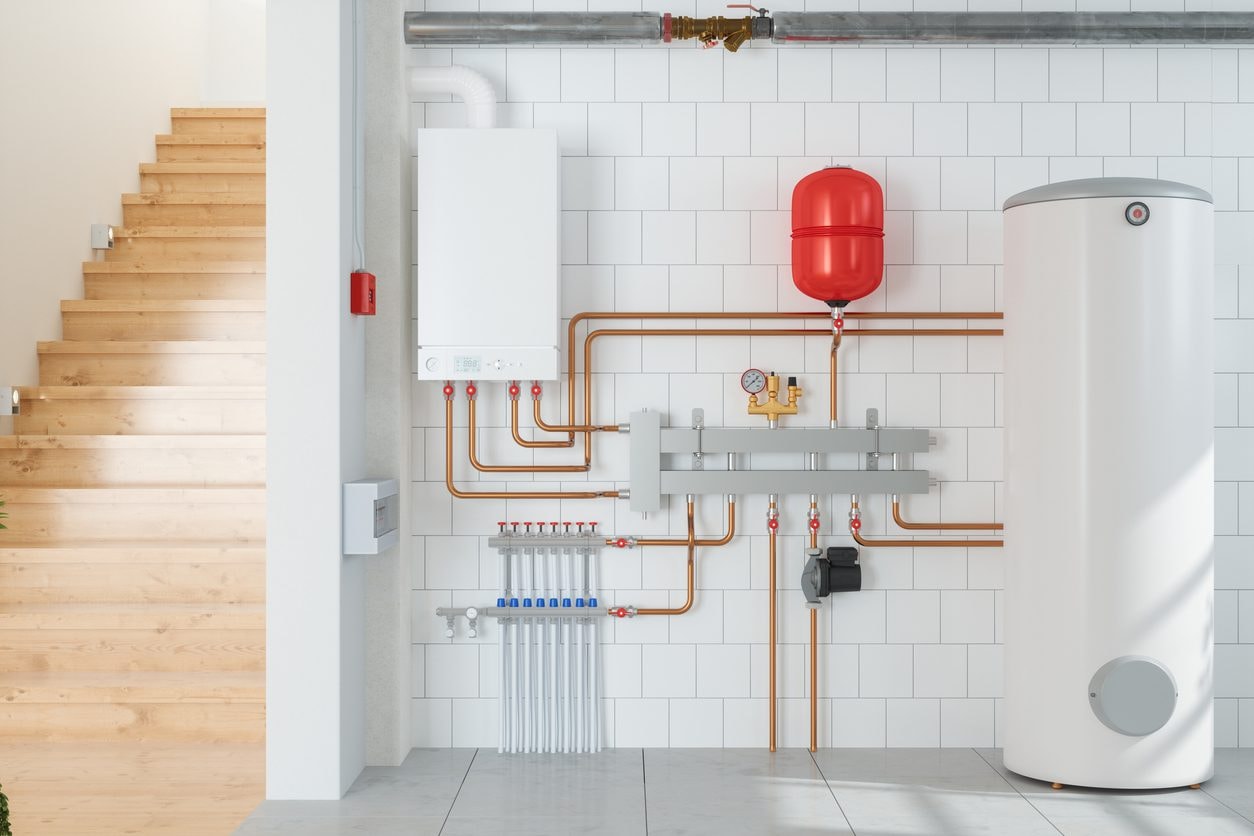
Development of a label B tank insulation for hot water tanks with a leading heating and cooling system manufacturer
Enbi developed an energy-efficient, hygienic, and easy-to-install insulation system that helped a leading manufacturer meet Label B standards—cutting heat loss and boosting customer satisfaction.
Background
A prominent heating and cooling systems manufacturer, known for their extensive line of energy-efficient solutions, approached us with a challenge: to design and develop an insulation system for their storage tanks that meets stringent Label B energy efficiency standards. The insulation needed to be easy to install, easy to clean, and require minimal maintenance over its lifespan.
Objectives
The main objectives of the project were:
- Energy efficiency: Achieve Label B certification for the insulation, which necessitates a high standard of thermal performance.
- Ease of installation: Design an insulation system that could be installed quickly and efficiently, reducing installation time and costs.
- Low maintenance: Create a solution that would remain effective over time without frequent maintenance.
- Hygienic and easy to clean: Ensure that the insulation materials are easy to clean and resistant to mold and mildew.
Challenges
Several challenges needed to be addressed in order to meet these objectives:
1. Material selection - Identifying materials that would not only provide excellent thermal insulation but also be lightweight, durable, and cost-effective. 2. Design constraints - The insulation system needed to be compatible with existing tank designs, which required working within tight dimensional constraints. 3. Durability and hygiene - The insulation material had to withstand long-term exposure to high temperatures and moisture without degrading or becoming a breeding ground for bacteria. 4. Regulatory compliance - Ensuring the product met both the Label B certification requirements and other relevant industry standards for safety and performance.
Approach
1. Research and development We began by conducting a comprehensive material study to identify potential insulation materials. The team focused on materials with low thermal conductivity, high moisture resistance, and durability. After evaluating several options, we selected a high-density foam composite, which provided the right balance of insulation performance and structural integrity. This composite also had a non-porous outer layer that resisted mold growth and allowed for easy cleaning.
2. Prototyping and testing With the material selected, we moved to the design phase. We developed a modular insulation panel system that could be easily applied to the exterior of storage tanks. These panels were designed to interlock, providing a snug fit that minimized heat loss.
We created multiple prototypes and subjected them to rigorous testing:
- Thermal performance testing: To ensure the insulation met Label B standards, we measured heat retention and thermal conductivity under simulated operating conditions.
- Durability testing: The insulation was exposed to high humidity and temperature cycling to simulate years of use.
- Ease of Installation Assessment: We worked with technicians to test the installation process, making adjustments to reduce time and effort.
3. Implementation and feedback After refining the design based on testing feedback, we produced a batch of the final insulation panels and delivered them to the manufacturer's assembly line for real-world application. The installation process was straightforward, with panels clicking into place without the need for adhesives or specialized tools. This approach not only minimized installation time but also allowed for quick removal and replacement if necessary.
Outcomes
- Energy efficiency: The final product met all label B certification criteria, demonstrating significant energy savings compared to uninsulated tanks.
- Ease of installation: The modular design reduced installation time by over 30%, resulting in lower labor costs and higher efficiency.
- Maintenance-free and hygienic: The composite material’s outer layer remained mold- and mildew-free throughout testing and was easy to clean with simple wiping. It also required no additional maintenance after installation.
- Customer satisfaction: The manufacturer reported high levels of customer satisfaction with the insulation’s performance, ease of installation, and minimal maintenance requirements.
Conclusion
The partnership with the heating and cooling systems manufacturer resulted in the successful development of a label B tank insulation system that met all project objectives. By focusing on material innovation, practical design, and rigorous testing, we delivered a solution that was energy-efficient, easy to install, and required no ongoing maintenance. This project not only enhanced the manufacturer’s product offering but also set a new standard for storage tank insulations in the industry.
More from our portfolio
The use of cast urethane blocks to eliminate shock caused by containers containing military hardware during deployment
Discover how Enbi’s cast urethane blocks protect sensitive military equipment during high-impact airdrops - minimizing shock, reducing damage, and ensuring mission-ready performance.
Enbi helps to keep the lotteries moving
By optimizing material hardness and compression set, Enbi delivered rollers that handle varying ticket types smoothly—helping the customer scale their new vending solution.
EnbiSeal - performance you can rely on whatever the conditions
Enbi’s wax-free formulation solved performance issues in extreme heat—extending seal life, reducing SKUs, and cutting installation time for commercial construction clients.